Dry eye

Meibomian gland dysfunction (MGD) and refractive surgery

Bordeaux - France

dr marty

Dr Anne-Sophie Marty

Dr Anne-Sophie Marty, Thiers Ophthalmology Practice, Thiers Ophthalmology Clinic, Bordeaux, France

Diagnosis and treatment of a female patient with mixed Dry Eye Syndrome (DES) aggravated by refractive surgery. A full diagnosis was made via clinical examination and examinations using the C.Diag® imaging platform. Symptomatic treatment combined with Intense Pulsed Light treatment using the C.Stim®IPL system was started for the patient. After 3 C.Stim® IPL sessions, the patient's quality of life was restored due to a clear improvement in symptoms and an improvement in MGD, with better meibum expression and quality.

Anamnesis :

30-year-old female patient Mrs L.Y., deputy director in the medico-social sector, underwent laser eye surgery (LASIK) in 2018. She had been experiencing symptoms since 2019: dry eye sensation, stinging, watering, burning, redness, nighttime pain (OD>OS). She rated the frequency of these symptoms as 5/10 and their intensity as 8/10. The DEQ-5 questionnaire had a score of 13.
#1

Clinical examination

media cas clinique 6

Treatment was already in place for this patient:

  • Eyelid care, blinking exercises
  • Artificial tears as required (Hyloconfort®, Hylovis lipo®, Liposic® or Vitamin A® ointment, Naabak®)
  • Intolerance to Azyter®, Ikervis®, Doxycycline®
  • Lacrimal plug in left lower punctum

The identified risk factors for Dry Eye Syndrome (DES) were LASIK surgery, screen use, cutaneous rosacea, history of chalazions, previous contact lens use, dust mite and pollen allergy and long-term antihistamine use.

The ophthalmological examination showed the following results:

OD


OS

10/10 P2AV10/10 P2
+0.25 (-0.25 110°)Refractionplan
12IOP15

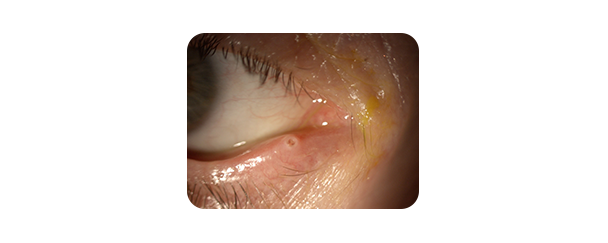
The slit-lamp examination did not reveal superficial punctate keratitis. It showed a fluorescein-filling defect (presence of spots), average BUT of 7sec//8 sec, lid margin telangiectasias, thick meibum, conjunctival hyperemia and conjunctival papillae. Lid-parallel conjunctival folds (LIPCOF) were also shown. 

#2

Paraclinical examination

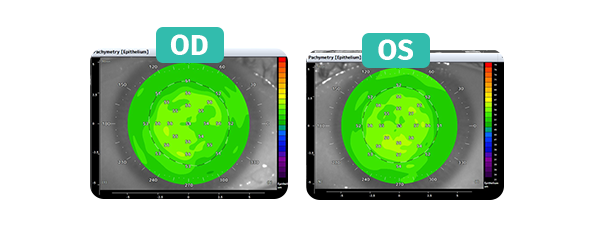
Epithelial mapping

The paraclinical examination began with epithelial mapping, revealing the onset of concentric epithelial atrophy.


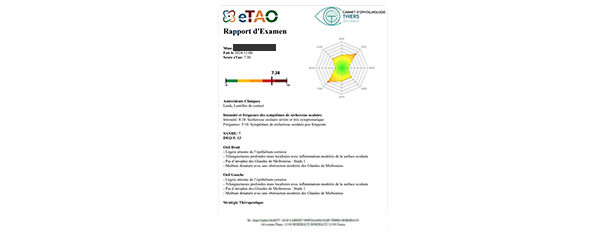
eTAO score

The eTAO is a new DES severity score.

  • The report provided by C.Diag helps with therapeutic patient education
  • The eTAO report provides an overall dry eye score
#3

Ocular surface analysis with C.DIAG®


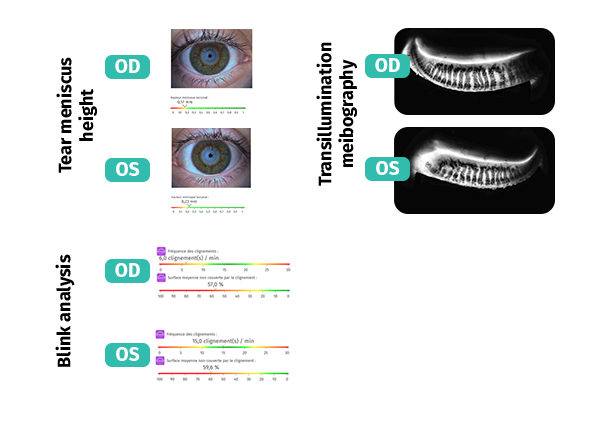
An ocular surface analysis was then performed using the C.DIAG® platform, with the following results:

  • Tear meniscus height: lower OD= 0.17 mm // OS = 0.23 mm -> aqueous deficiency
  • Interferometry: correct ODS
  • NIBUT: reduced to 8 sec OD / 10.4 sec OS -> Slight tear instability
  • Transillumination meibography: stage 1 MG atrophy (MG loss < 25%), stage 2 telangiectasias, note the presence of the OS lacrimal plug (arrow)
  • Blink analysis: pathological OD>OS. The blink analysis showed an insufficient blink rate in the right eye with more than 50% incomplete blinks.
#4

Diagnosis

Mixed dry eye due to moderate Meibomian gland dysfunction (MGD), along with post-refractive surgery aqueous deficiency.

An ophthalmological assessment was carried out to identify systemic dry eye syndrome prior to refractive surgery.

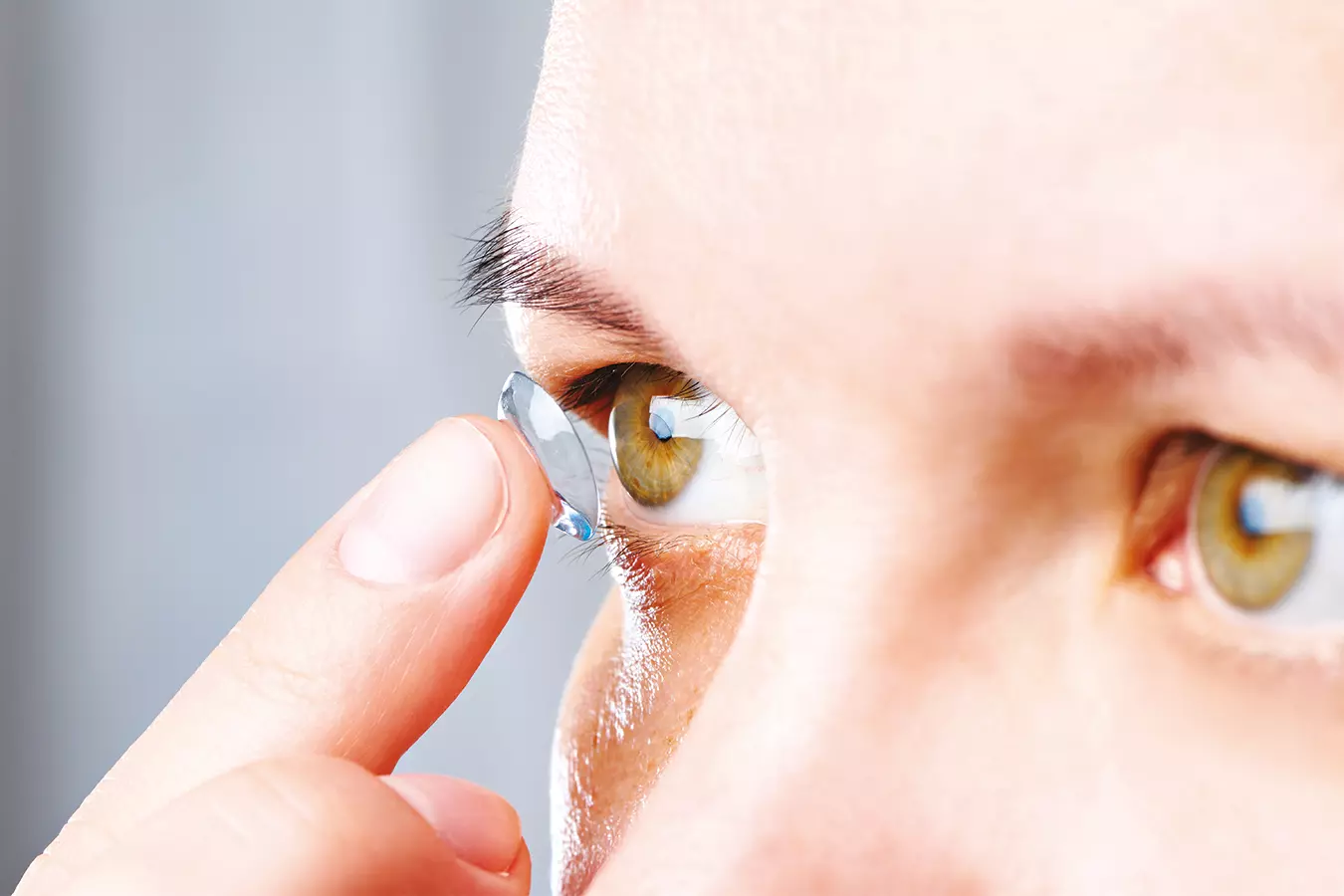
Focus on contact lens intolerance

A patient who used to wear contact lenses but became intolerant to them over time should raise concerns of developing MGD. 

Contact lens intolerance is a frequent cause for consultation with a view to refractive surgery.

Wearing contact lenses:

  • can lead to abnormal blinking, 
  • splits the tear film in two (pre- and post-lens)
  • makes the lipid layer thinner and more uneven (lipid layer)
  • causes corneal hypoesthesia leading to a lower tear turnover rate (aqueous layer)
  • reduces the number of mucus cells (mucin layer)

Screen work is the main cause of incomplete blinking. Wearing contact lenses while working on a screen is often uncomfortable due to the resulting MGD.

#5

Initial treatment

intial treatment

Initial treatment involved inserting lacrimal plugs in the right eye along with continued eyelid care and blinking exercises.

Systane Ultra® mucous membrane protector was also added. Allergen immunotherapy by an allergy specialist was offered.

A check-up was carried out after 3 months. The symptoms had reduced but were still present despite the patient complying with the treatment.

C.STIM® IPL treatment was therefore started in addition to continued symptomatic treatment.

#6

C.STIM® IPL treatment

ipl treatment

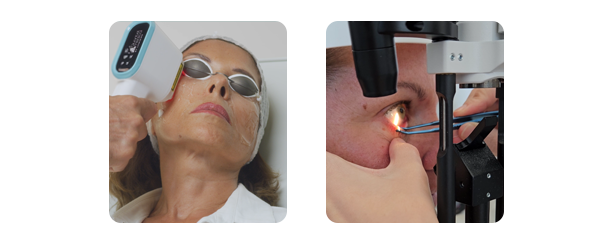
A 3-session course of treatment was started (D0, D15 and D30).

4 shots per side per session at a fluence of 8J/cm2. Protective goggles were worn by the patient and doctor during the treatment.

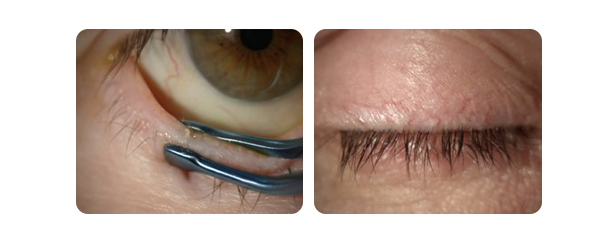
For optimal results, the doctor performed meibum expression using forceps at the end of each session. The heat generated by the C.STIM® IPL makes manual meibum expression easier.

#7

Results at 2 months

The patient's symptoms had significantly improved two months after the IPL sessions. In her own words, her eyes were "more comfortable".

She continued to use artificial tears in her right eye only during the day and uses Liposic® before bed. She performed eyelid care and cleaning three times a week, using a heated eye mask. She carried out forced blinking exercises and took regular screen breaks. She did not have the heating on in her bedroom.

The clinical examination did not reveal SPK. The BUT results were as follows: BUT 10 sec//10 sec. Lid margin telangiectasias and more fluid meibum OS>OD during meibum expression were observed.

Symptomatic treatment needs to be continued over the long term. Repeat IPL treatment is available if required.

#8

Conclusion

C.STIM® IPL treatment is rapid, effective and safe.

Dry eye following refractive corneal (or crystalline lens) surgery is a major cause of post-surgical dissatisfaction.

IPL treatment can easily be offered to patients already suffering from pre-operative and/or post-operative MGD when local symptomatic treatment is not effective enough.


Get this case study 
in PDF format: click here