

A/B/S/UBM Ultrasound Platform
Discover our ultimate ultrasound platform that offers unmatched image quality with an exceptional level of detail.
In ophthalmology, machines dedicated to ultrasound measurements are essential in the preparation for cataract surgery. Among the various technologies available, ultrasound biometry remains a cornerstone—especially in cases where optical methods fall short due to media opacities or abnormalities.
At Lumibird Medical, our commitment is focused on ultrasound biometry, delivering precise, reliable measurements across all patient profiles through our innovative devices.
Discover advanced solutions with the Compact Touch, Absolu, and Axialis, featuring the exclusive ProBeam probe for enhanced precision and performance.
Discover our ultimate ultrasound platform that offers unmatched image quality with an exceptional level of detail.

Discover Compact Touch®, the ultra-compact and ergonomic ultrasound platform.
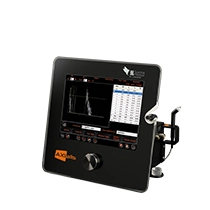

Discover the next-generation integrated, compact biometer and pachymeter.
Ultrasound biometry uses high-frequency sound waves to assess the eye's anatomical structures. Unlike optical methods, ultrasound is unaffected by corneal scarring or dense cataracts, making it ideal for challenging preoperative cases.
It is the most widely used ultrasound technique for measuring axial length (AL)—the distance from the corneal surface to the retina. AL is essential for calculating the intraocular lens (IOL) power in cataract surgery. The A-scan provides one-dimensional echo spikes that correspond to ocular interfaces, such as the anterior chamber, lens, and retina.
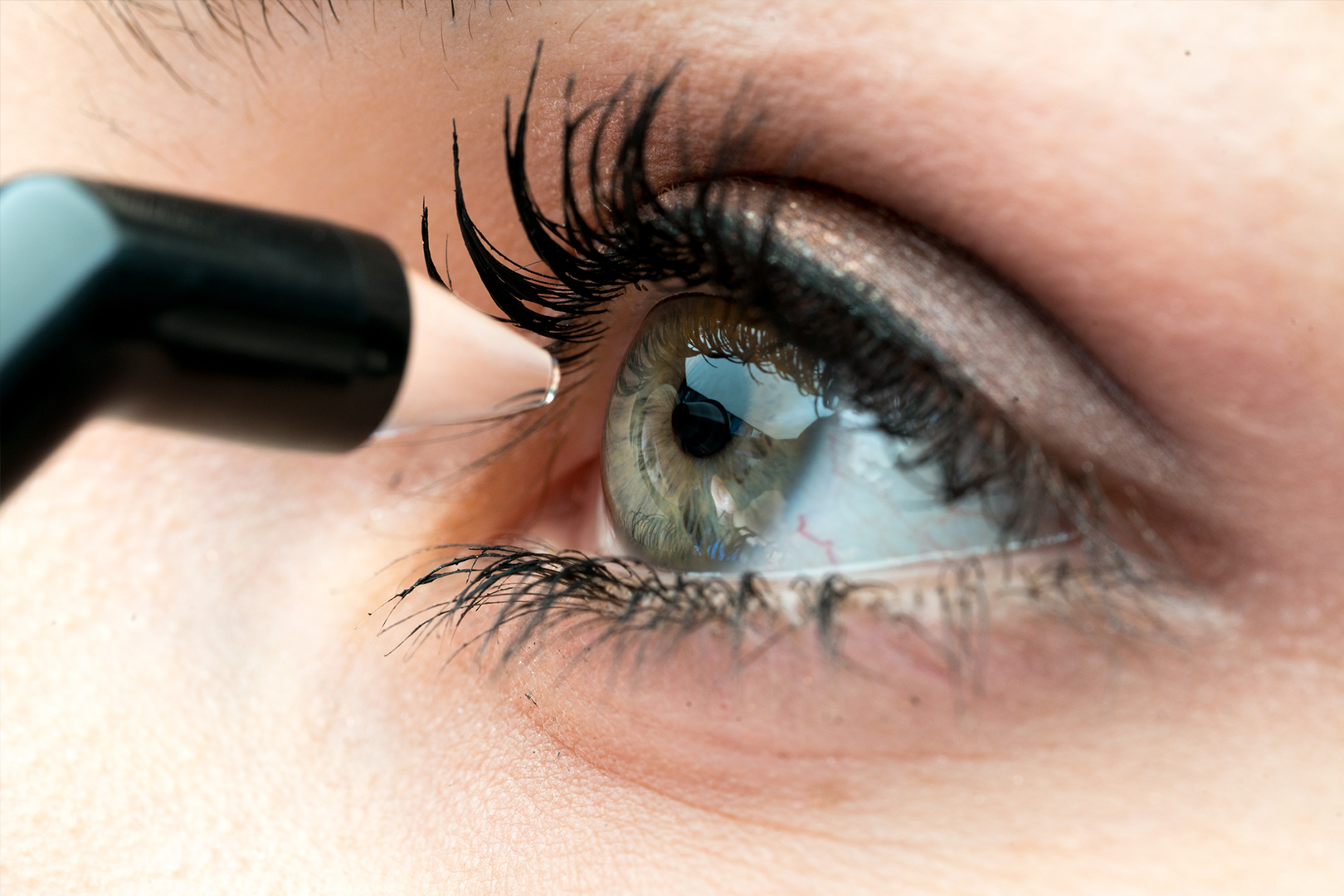
At Lumibird Medical, we have elevated A-mode biometry with our exclusive ProBeam probe. Developed by Quantel Medical, the ProBeam is a patented technology that improves alignment and repeatability through its unique design and ergonomic interface. It reduces corneal compression during contact procedure and enhances accuracy when used with immersion techniques.
Such technology provides a two-dimensional cross-sectional image of the eye and orbit. Though it is not used for measuring axial length directly, it plays a crucial role when cataract opacities or vitreous hemorrhage obstruct the visual axis. B mode allows the practitioner to visualize posterior segment structures and rule out pathologies like retinal detachment before surgery or staphyloma.
The combination of B and A-scan technologies in our devices supports a comprehensive diagnostic workflow, ensuring accurate biometry even in the most difficult cases.
Biometry guided by B mode is an exclusive from Lumibird Medical.
Accurate measurements are the foundation of successful cataract surgery. Ultrasound biometry machines provide key ocular metrics to optimize outcomes, ensuring accurate and reliable measurements.
Axial length is the most critical parameter in calculating the appropriate IOL power. A 1 mm error in AL measurement can result in approximately 3 diopters of refractive error postoperatively and it’s even worse with shorten eyes.
Biometry is particularly valuable for:
Devices like the Axialis, a dedicated A-mode biometry machine, are tailored for AL measurement with precision, offering user-friendly calibration and multiple measurement modes to improve repeatability.
Patients who have undergone refractive surgery (e.g., LASIK, PRK) present challenges in intraocular lens (IOL) power estimation. Changes to the corneal curvature can make standard keratometry and optical measurements less reliable.
Biometry bypasses anterior surface alterations by measuring AL independently of corneal shape. When combined with dedicated post-refractive IOL formulas, it can help restore precision in lens power prediction.
The Absolu ultrasound platform, designed for advanced ophthalmic diagnostics, integrates seamlessly with multiple IOL calculation methods, making it ideal for managing these complex cases.
There are two primary ultrasound biometry techniques: contact and immersion.
Our ABSolu, Compact Touch and Axialis platforms support both methods, providing flexibility depending on patient condition and practitioner preference. The ProBeam probe is engineered to facilitate precise alignment in both techniques, minimizing variability and maximizing reproducibility.
Even with advanced ultrasound devices, errors can occur if techniques are not properly applied. Common pitfalls include:
Challenging clinical scenarios include:
Devices like the Absolu and Compact Touch are designed to reduce user-dependent variability with intelligent software, preset protocols, and high-definition feedback to guide optimal probe positioning.
Lumibird Medical product range is designed to meet the needs of every clinical setting—from mobile practices to large-volume surgical centers.
Each device benefits from Lumibird Medical’s decades of experience in ophthalmic ultrasound, ensuring that eye care professionals receive dependable tools for precise and efficient biometric evaluation.