
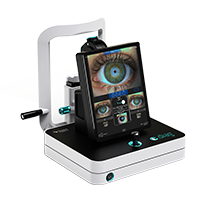


Dry eye diagnosis
CDiag® the most Complete Automatic Premium Diagnostic Platform dedicated to dry eye and ocular surface diseases.
Dry Eye Disease (DED) is a growing concern in ophthalmology and optometry, impacting millions of people worldwide. For eye care professionals, managing this disease presents a dual challenge: it requires both a precise diagnosis of the ocular surface and a consistent, multi-step treatment protocol.
Understanding the underlying mechanisms behind each symptom of dry eye is crucial to building a successful care strategy. Traditional approaches often fail to deliver lasting relief because they target only one aspect of the disease. Today, eye care professionals need a complete dry eye solution—one that spans diagnosis, treatment, and patient education.
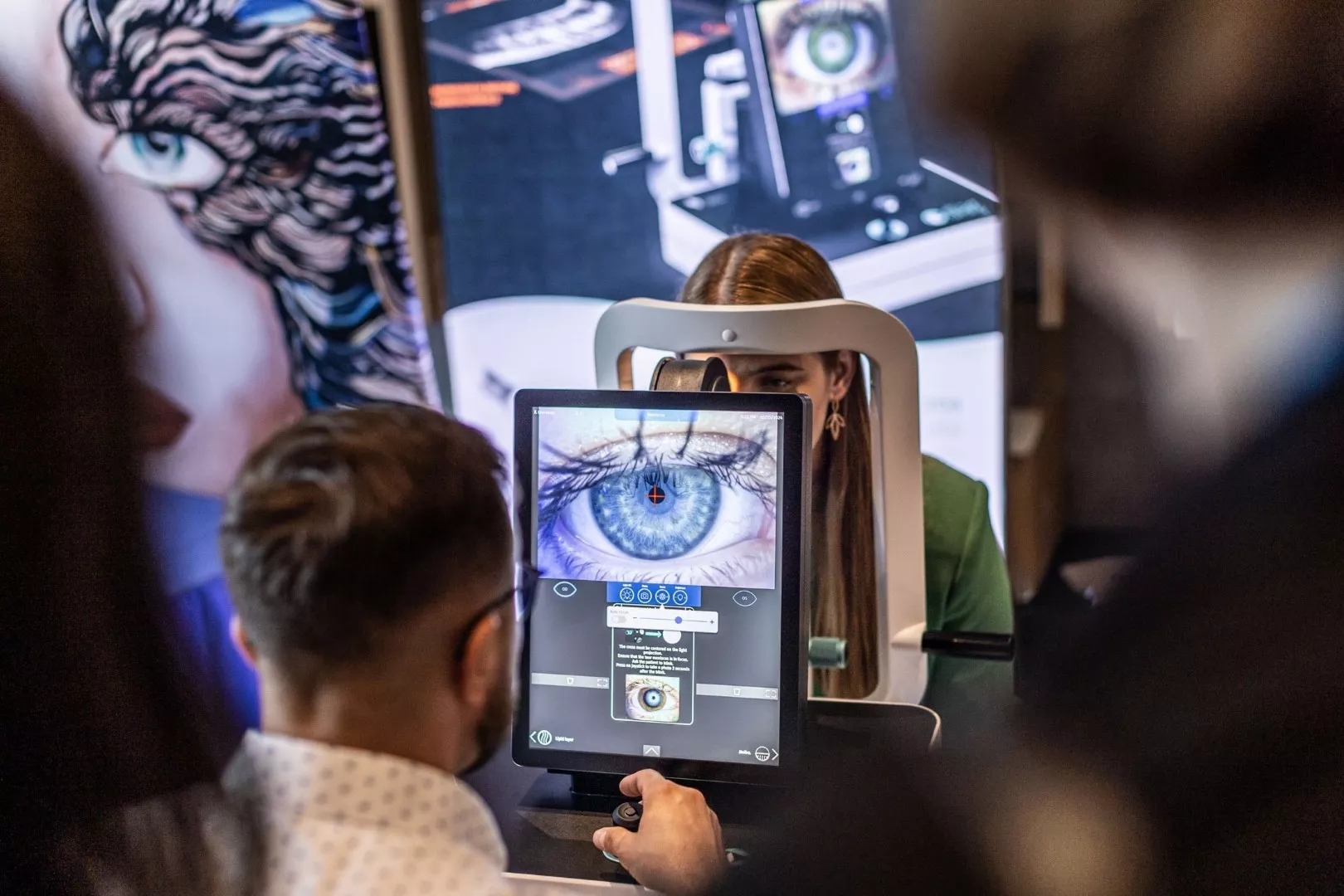
CDiag® the most Complete Automatic Premium Diagnostic Platform dedicated to dry eye and ocular surface diseases.
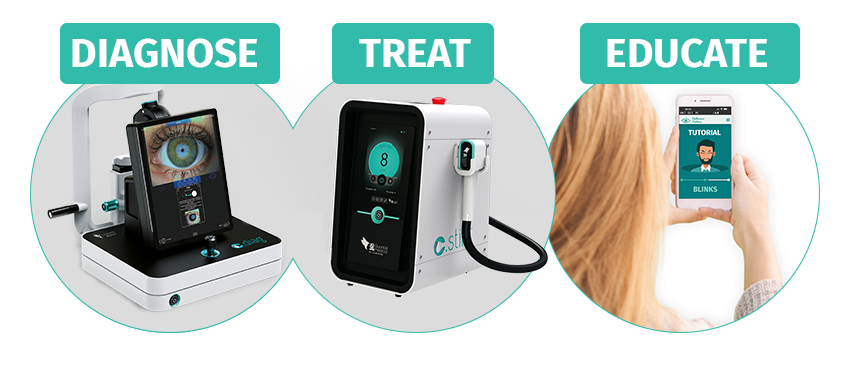


C.SUITE supports you at every stage of dry eye management: diagnosis, treatment and information for your patients.

Find out more about this premium device designed by Lumibird Medical to treat the root cause of dry eye.
Meibomian Gland Dysfunction (MGD) is one of the leading causes of evaporative dry eye. It occurs when the meibomian glands, responsible for secreting lipids that stabilize the tear film, become blocked or dysfunctional. This leads to increased lacrimal evaporation and to inflammatory reactions.
Blepharitis is a chronic inflammation of the eyelid margin that disrupts tear film stability. It often coexists with MGD and requires targeted eyelid hygiene, such as warming masks and lid cleansing, which form part of the dry eye routine.
Consistent management of the eyelid is critical to break the cycle of the inflammatory reaction and prevent relapse.
Ocular rosacea is a skin condition that also impacts the eyes, causing inflammatory reactions, redness, and meibomian gland dysfunction. It is often underdiagnosed and undertreated. C.STIM system is particularly effective in treating this inflammatory component.
Some individuals suffer from chronic dry eye due to systemic diseases (e.g., Sjögren’s syndrome), long-term contact lens use, or medication side effects. These cases demand a long-term, multimodal approach, integrating both treatment and lifestyle management tools.
DED is rarely caused by a single factor. In most cases, it's the result of overlapping issues—MGD, blepharitis, inflammation, tear film instability. That’s why a complete offer like the Lumibird Medical C.SUITE is essential to address the full complexity of the disease.
Devices such as the C.STIM IPL are specifically designed to treat Meibomian Gland Dysfunction (MGD) by enhancing meibum quality and restoring gland function. They effectively reduce inflammation by targeting rosacea, telangiectasia, and demodex, while also alleviating neuropathic pain and symptoms.
Accurate diagnosis is the cornerstone of successful management disease. The use of CDIAG imaging platform is the first and only device to centralize all essential diagnostic tests for dry eye in one compact unit.
This comprehensive imaging workflow ensures that practitioners can accurately identify the cause(s) of DED and personalize treatment protocols accordingly. CDIAG simplifies the clinical workflow, elevates imaging precision, and automatically generates easy-to-interpret, comprehensive exam reports — including an evolution curve — within minutes, enabling objective follow-up between sessions.
An early focus on symptom tracking helps guide more effective diagnostic decisions.
Eyelid hygiene stimulates and maintains the function of the Meibomian glands, which produce the lipid layer. It is a daily routine that not only reduces eye discomfort, but also optimizes and prolongs the results of treatments such as IPL.
This routine form the first line of therapy and are critical for long-term patient adherence and symptom relief.
When an inflammatory condition is a primary factor, as in MGD or rosacea, Intense Pulsed Light therapy becomes a game-changer. The C.STIM IPL device is designed specifically for DED, delivering light pulses that:
IPL treatment with C.STIM is non-invasive, well-tolerated, and suitable for integration into regular clinical workflows. Results are often visible within a few sessions, offering sustained improvement.
With proper guidance, clinicians can better understand when to use Intense Pulsed Light and how to treat patients in a way that supports long-term relief.
Treatment success in DED depends not only on the device, but also on the patient's understanding and engagement. Many patients abandon treatment due to a lack of knowledge or unrealistic expectations.
That’s why Lumibird Medical includes a complete Patient Communication Kit as part of its dry eye offering. This includes:
These materials support motivation and increase therapeutic adherence, ultimately improving clinical outcomes.
Unlike fragmented solutions that address only parts of the problem, Lumibird Medical’s C.SUITE offers a comprehensive ecosystem:
This all-in-one approach streamlines the practitioner’s workflow, enhances clinical efficacy, and builds long-term patient trust.
You’re not just treating dry eye—you’re transforming how you care for your patients.