
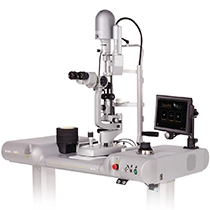


Premium Yellow Laser
Discover our 577nm fiber technology laser platform featuring SingleSpot, Multispot and Subliminal® treatment modes for retinal treatments.
Laser technology is essential in managing retinal diseases such as diabetic retinopathy, macular edema, and CSCR. As a global leader in ophthalmic lasers, Lumibird Medical—bringing together Quantel Medical and Ellex—offers advanced solutions for photocoagulation, subthreshold, and photodynamic laser treatments.
With devices like Easyret, Vitra 2, Vitra 689 and Integre Pro, we support retina specialists in delivering precise, safe, and effective care.
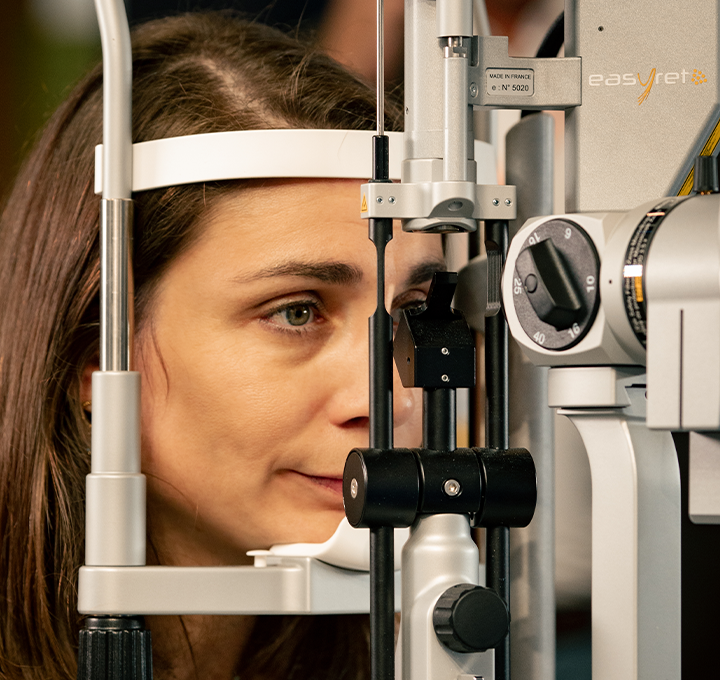
Discover our 577nm fiber technology laser platform featuring SingleSpot, Multispot and Subliminal® treatment modes for retinal treatments.
Laser therapy is a cornerstone in the management of several retinal diseases. It allows eye doctors to stabilize or improve vision, seal retinal tears, and preserve retinal tissue with high precision. This section explores key retinal conditions that can be effectively treated with laser.
CSCR is characterized by fluid accumulation under the retina, causing blurred or distorted vision. Laser therapy—especially subthreshold and PDT treatments—is used to target the affected area of the retina and stimulate reabsorption of the subretinal fluid, without causing additional retinal damage.
PDR is a complication of diabetes where abnormal blood vessels form on the retina. If left untreated, it can lead to retinal detachment, bleeding, and loss of vision. Laser photocoagulation treatment is used to shrink these vessels, preventing further any damage to the retina.
Laser photocoagulation is effective in reducing fluid leakage in DME. By applying targeted laser spots to leaking vessels, the procedure helps reduce edema and maintain vision.
The right laser treatment depends on the condition, the area affected, and the severity. Lumibird Medical offers a full range of lasers designed for each specific application.
Laser Photocoagulation procedure is often used to treat localized retinal conditions such as DME. A beam of light is focused precisely on the leakage point to seal a retinal tear or close leaking vessels, preserving surrounding tissue.
This is a laser surgery primarily for PDR. Multiple laser spots are applied across the retina to stop neovascularization. Though it may cause peripheral vision loss, it prevents more serious complications like retinal detachment.
SubLiminal technology by Lumibird Medical delivers laser energy in pulses, minimizing damage to the retina. This type of laser is ideal for chronic conditions where preservation of healthy retinal tissue is critical. It reduces heat buildup and allows for multiple sessions with lower risk.
In PDT, a photosensitive agent is activated by a laser beam to selectively treat abnormal vessels. It does not damage surrounding retinal tissue and is a good choice for delicate macular zones.
Lumibird Medical brings together the strength of two globally recognized brands in ophthalmology—Quantel Medical and Ellex—to offer a comprehensive and innovative range of retinal lasers. From cutting-edge technology to ergonomic design, our devices are engineered to support the needs of modern retina specialists. Here’s why leading eye doctors around the world trust our solutions:
Quantel Medical exemplifies innovation in retinal laser technology. As the inventor of the solid-state 532nm photocoagulator with diode-pumped technology, Quantel Medical has continually driven advancements in clinical performance.
Ellex lasers bring a unique combination of aesthetic design, durability, and clinical performance to the retinal treatment space.
All Lumibird Medical lasers are designed with the practitioner in mind. With intuitive interfaces, compact footprints, and compatibility with existing clinical infrastructure, our systems ensure smooth integration into any workflow—whether in private practice or hospital settings.
From SubLiminal technology to MultiSpot delivery, our lasers are built to minimize thermal damage, reduce treatment time, and improve therapeutic precision. These features allow clinicians to preserve retinal tissue, reduce patient discomfort, and achieve better visual outcomes—particularly in chronic and delicate retinal conditions.