
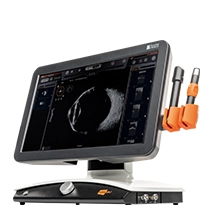


A/B/S/UBM Ultrasound Platform
Discover our ultimate ultrasound platform that offers unmatched image quality with an exceptional level of detail.
Lumibird Medical offers cutting-edge devices to enhance the accuracy of glaucoma diagnosis. Their innovative solutions provide clinicians with precise insights into eye health, enabling better assessment and monitoring. Our ultrasound devices provide clinicians with essential insights for glaucoma assessment:
With these advanced diagnostic tools, Lumibird Medical supports precise and reliable glaucoma diagnosis for improved patient care.
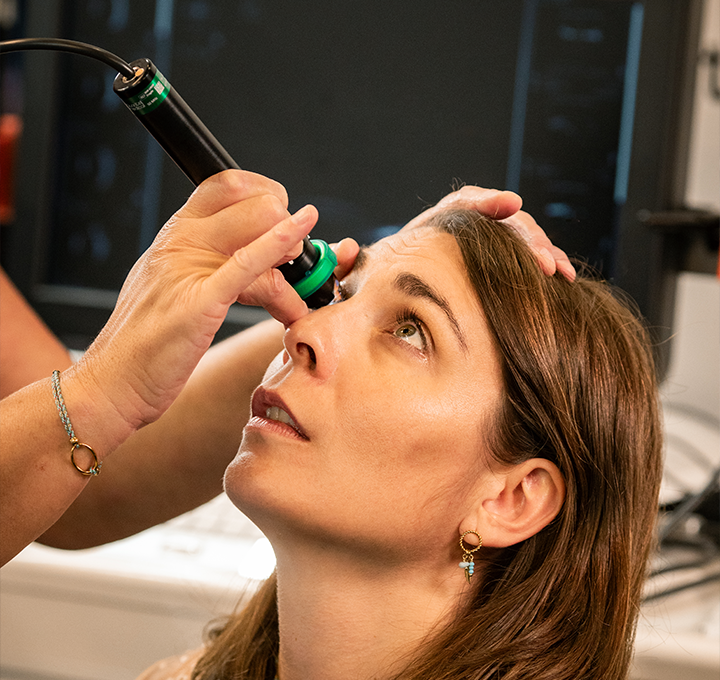
Discover our ultimate ultrasound platform that offers unmatched image quality with an exceptional level of detail.
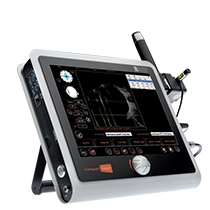

Discover Compact Touch®, the ultra-compact and ergonomic ultrasound platform.
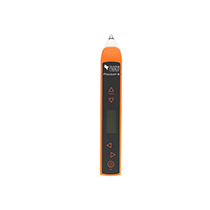

Discover our new handheld ultrasound pachymeter
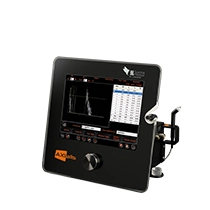

Discover the next-generation integrated, compact biometer and pachymeter.
Glaucoma is a chronic and progressive eye disease that affects millions of people worldwide. It primarily damages the optic nerve, which is crucial for vision, transmitting visual information from the eye to the brain. This damage is often due to increased IOP, though glaucoma can also occur with normal eye pressure levels. Without timely diagnosis and effective eye treatment, glaucoma can cause irreversible vision loss and eventual blindness.
As one of the leading causes of blindness globally, glaucoma presents a serious health challenge. Since the glaucoma often progresses silently and without noticeable symptoms in its early stages, early detection is critical. Advanced diagnostic tools, such as ultrasound devices equipped with pachymetry and ultrasonic biomicroscopy (UBM), play a key role in identifying glaucoma at an early stage of eye degeneration.
There are several types of glaucoma that ophthalmologists must diagnose and treat, including:
Accurate diagnosis of these types of glaucoma allows for personalized eye treatment strategies and better outcomes for patients.
The early signs of glaucoma are often subtle and may be difficult for patients to detect. This is why regular eye diagnostic testing is essential, especially for individuals with known risk factors. Early symptoms may include:
As the disease advances, patients may experience more severe symptoms, such as:
Given that glaucoma can progress without causing noticeable symptoms initially, ophthalmologists must rely on advanced eye diagnostic tests to identify the glaucoma before it reaches a critical stage.
Lumibird Medical offers cutting-edge ultrasound devices designed to enhance glaucoma diagnosis. These devices enable ophthalmologists to assess IOP accurately, visualize the anterior segment, and detect abnormalities that contribute to glaucoma. Two key diagnostic tools include:
Pachymetry measures eye corneal thickness, an essential factor in assessing intraocular pressure. Accurate IOP measurement is critical because corneal thickness can influence pressure readings. For example:
By obtaining precise corneal thickness measurements, ophthalmologists can adjust IOP readings and develop more accurate treatment plans for their patients. Lumibird’s advanced pachymetry solutions such as POCKET III handheld pachymeter offer:
Ultrasonic biomicroscopy (UBM) is a high-frequency ultrasound technique that provides detailed imaging of the eye’s anterior segment. This test is especially valuable for evaluating the eye drainage angle and detecting anatomical anomalies that increase the risk of glaucoma, particularly closure glaucoma.
Lumibird Medical integrates UBM technology into advanced ultrasound platforms such as the ABSolu A/B/S/UBM ultrasound system, designed to support comprehensive ophthalmic diagnostics within a single device.
Using UBM, ophthalmologists can precisely visualize key ocular structures, including the iris, ciliary body, and lens, enabling them to:
By incorporating UBM into routine diagnostic protocols, clinicians can enhance early glaucoma detection, refine risk assessment, and improve overall diagnostic confidence.
Lumibird Medical supports ophthalmologists with high-precision ultrasound technologies designed to meet the clinical challenges of glaucoma diagnosis. By combining pachymetry and ultrasonic biomicroscopy (UBM) within advanced diagnostic systems, clinicians gain reliable insights into intraocular pressure, anterior segment anatomy, and glaucoma risk factors.
What sets Lumibird Medical apart is its ability to deliver:
As glaucoma remains a leading cause of irreversible vision loss, choosing accurate, reliable, and advanced diagnostic technology is essential. With Lumibird Medical, clinicians benefit from innovative ultrasound solutions designed to support early diagnosis, improve clinical decision-making, and ultimately help preserve patients’ vision.