Dry eye

Meibomian Gland Dysfunction & contact lenses

Saint-Étienne, France

dr trone

Dr Marie-Caroline Trone

Hospital-based Ophthalmologist Saint-Étienne University Hospital – France

Diagnosis and treatment of a female patient who wears soft contact lenses and has dry eye syndrome (DES) with mild meibomian gland dysfunction (MGD). A full diagnosis was performed by means of clinical examination, and C.STIM® intense pulsed light treatment was initiated. After three months, a reduction in symptoms was observed and contact lens comfort had improved throughout the day.

Anamnesis :

Ms B., aged 24, a medical student, complained of contact lens discomfort at the end of the day, involving stinging and a gritty sensation in the eyes. She is short-sighted and wears soft, bi-monthly contact lenses.
#1

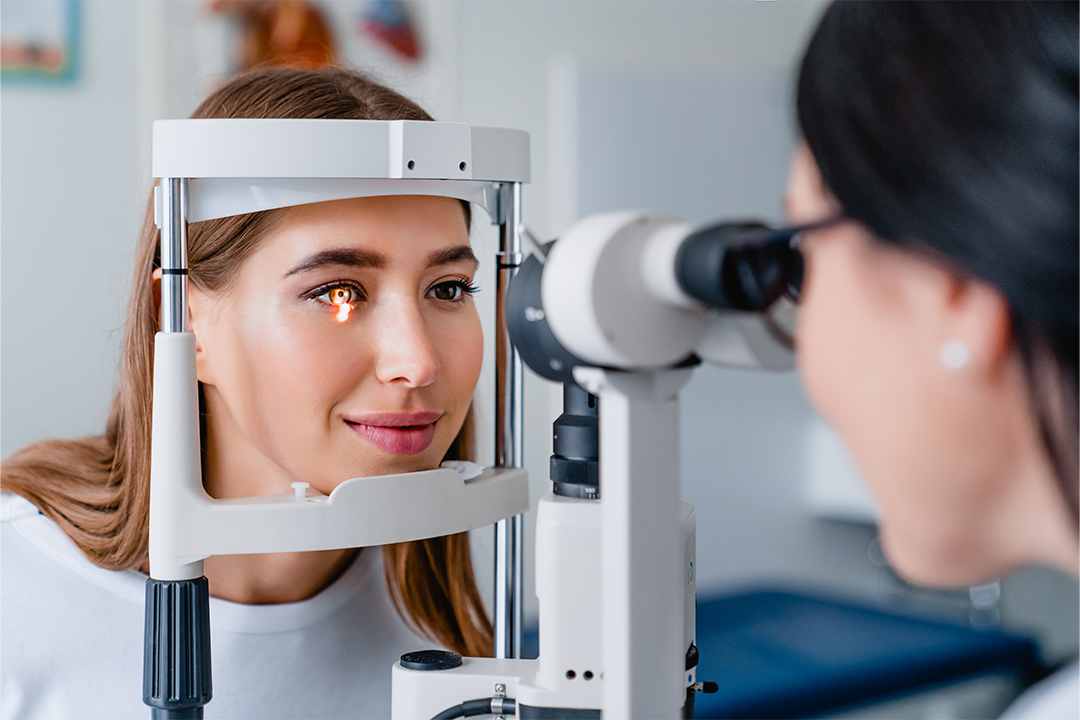
CLINICAL EXAMINATION

clinical exam

The interview revealed contact lens use as a risk factor for dry eye disease. 

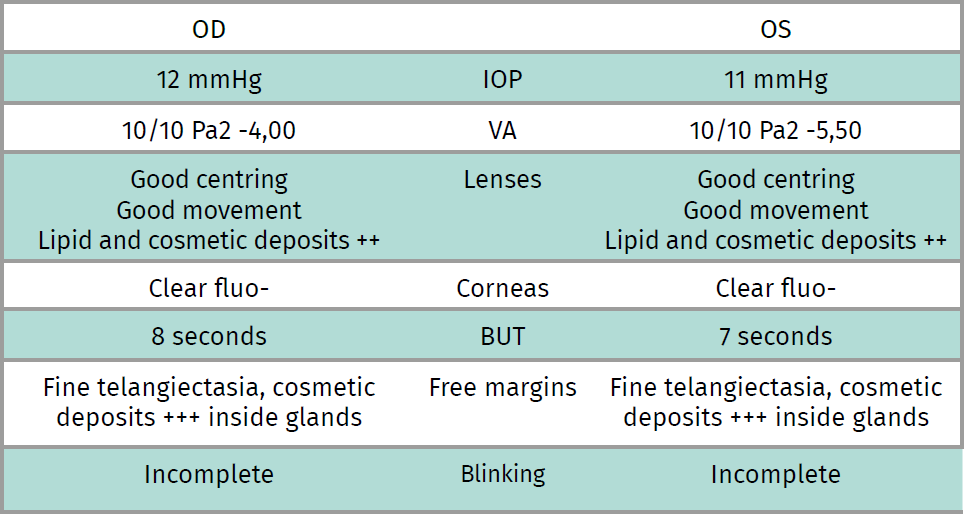
The OSDI questionnaire score was 25, with contact lenses. The results of the eye examination were as follows:

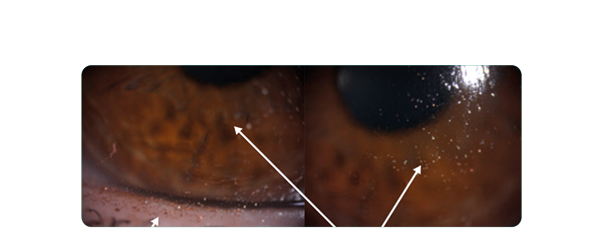
The slit lamp examination showed lipid deposits as well as significant cosmetic deposits inside the meibomian glands.

Significant deposits on her contact lenses combined with mild meibomian gland dysfunction (MGD) were causing evaporative dry eye syndrome (DES). The patient was experiencing significant contact lens discomfort, which could result in her giving up wearing them.

Focus on lipid deposits on lenses

Lipid deposition on lenses varies depending on:

  • the chemical composition of the lens material
  • variations in the composition of the tear film from one individual to another
  • blinking quality
  • environmental factors

The current health context (working from home, increased screen time, wearing a mask, etc.) can also make this worse.

It is therefore important to focus on prevention, emphasising the importance of massaging/rinsing lenses and changing them more frequently (fortnightly or daily).

#2

INITIAL TREATMENT

The patient was told to perform blinking exercises to ensure meibum is expressed naturally from the meibomian glands with each blink.

Eyelid care was also explained to the patient, involving eyelid heating and massage. Instillation of low viscosity, preservative-free artificial tears onto the lenses was prescribed, to be used as necessary during the day. She was given tips on lens care: massaging lenses after removal and before soaking, using oxidising or multifunctional care products. Make-up should be avoided on the lower eyelid margin.

A two-month follow-up appointment was scheduled with the patient.

During this appointment, the patient said she had noticed an improvement in her lens comfort thanks to the treatments prescribed (eyelid massage, blinking exercises). However, discomfort persisted at the end of the day, and her vision was sometimes blurred.

The clinical examination showed mild meibomian gland dysfunction and the presence of lipid deposits (no cosmetic deposit observed).

IPL treatment with C.STIM® was proposed, with continuation of the symptomatic treatment.

#3

IPL TREATMENT WITH C.STIM®

ipl

The treatment protocol comprised three sessions on D0, D15 and D45.

Four shots were performed per side per session at a fluence of 8 J/cm2. Both the patient and the doctor wore protective goggles during the treatment.

At the end of each session, the doctor performed meibum expression using forceps, for optimal results. The heat generated by C.STIM® IPL treatment makes it easier to express the meibum by hand.

Please note, it is important that the patient removes their contact lenses before each session if the lenses are very filmed over.

#4

RESULTS AT THREE MONTHS

Three months after the IPL treatment protocol, the patient observed an improvement in her symptoms. The clinical examination showed that there were no longer any lipid deposits on the lenses. 

Her lenses felt much more comfortable throughout the day.

To conclude, ocular surface examination and treatment of dry eye syndrome/MGD are essential prior to any contact lens adjustment.

IPL treatment helps fight lipid deposits on lenses, which can cause discomfort and potentially lead to the patient giving up on lenses.

Get this case study 
in PDF format: click here