Dry eye is a multifactorial pathology that affects the surface of the eye and the eyelids. There are different forms of dry eye, including:
- evaporative dry eye, or dry eye due to meibomian gland dysfunction (MGD), in which the lipid layer is cannot limit the evaporation of tears;
- dry eye due to aqueous deficiency, caused by insufficient production of tears;
- mixed dry eye, which combines evaporative and aqueous deficiency dry eye.
As a result, the management of patients with dry eye syndrome can be difficult, because it often requires more than one treatment.
IPL is one of the new treatments available for dry eye. These multiple mechanisms of action will allow the treatment of the root causes, such as meibomian gland dysfunction, inflammation (rosacea and blepharitis), Demodex and neuropathic pain.
What is IPL (Intense Pulsed Light) and how does it work?
IPL allows the delivery of intense pulsed light thanks to a flash lamp that emits polychromatic light.
One of the main mechanisms of action of IPL is its thermal effect, which liquefies the meibum in the Meibomian glands, and therefore makes it easier to unblock these glands responsible for producing the lipid layer of tears.
Not all of the mechanisms of action are fully understood to date, but many studies have also shown an anti-inflammatory effect on the surface of the eye, an anti-infective effect and an anti-parasitic (anti-Demodex) effect. IPL also has an effect on the corneal nerves and the nerves of the ocular surface, relieving neuropathic pain.
When should IPL treatment be offered?
The role of IPL in the therapeutic approach depends on the patient. It can be offered as a second- or third-line treatment, for example, in patients who have already had several treatments and aren’t responding to eyelid care plus antibiotics. But depending on the practice, IPL could be offered much earlier, because the effect is very fast and can be very long lasting.
It is important to note that all dry eye treatments are complementary, which means you can switch from one treatment to another depending on the patient’s treatment adherence or their history.
What are the recommendations before an IPL treatment?
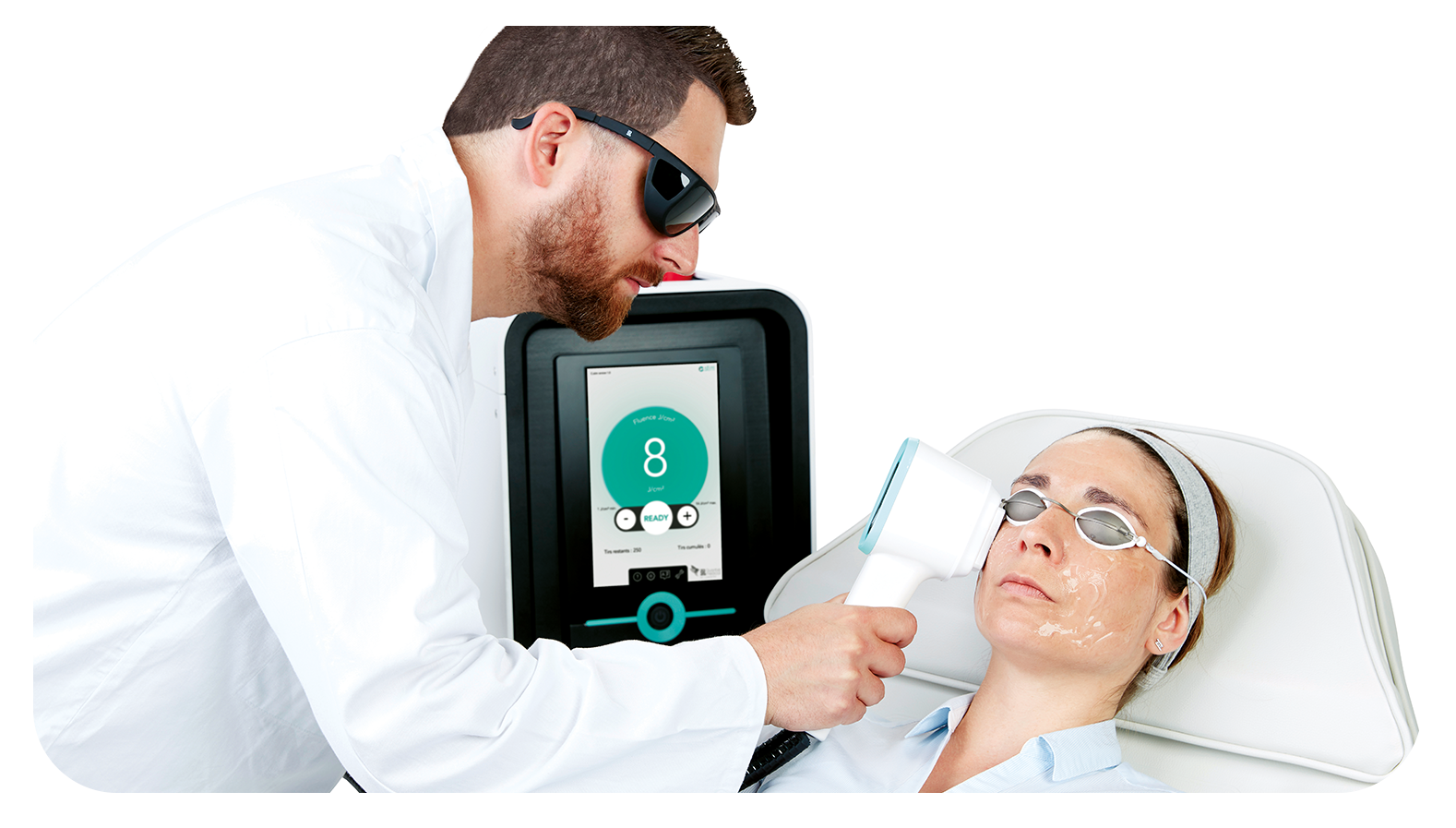 IPL treatment can be performed in the practice. The patient should not be wearing make-up and ideally should be shaved.
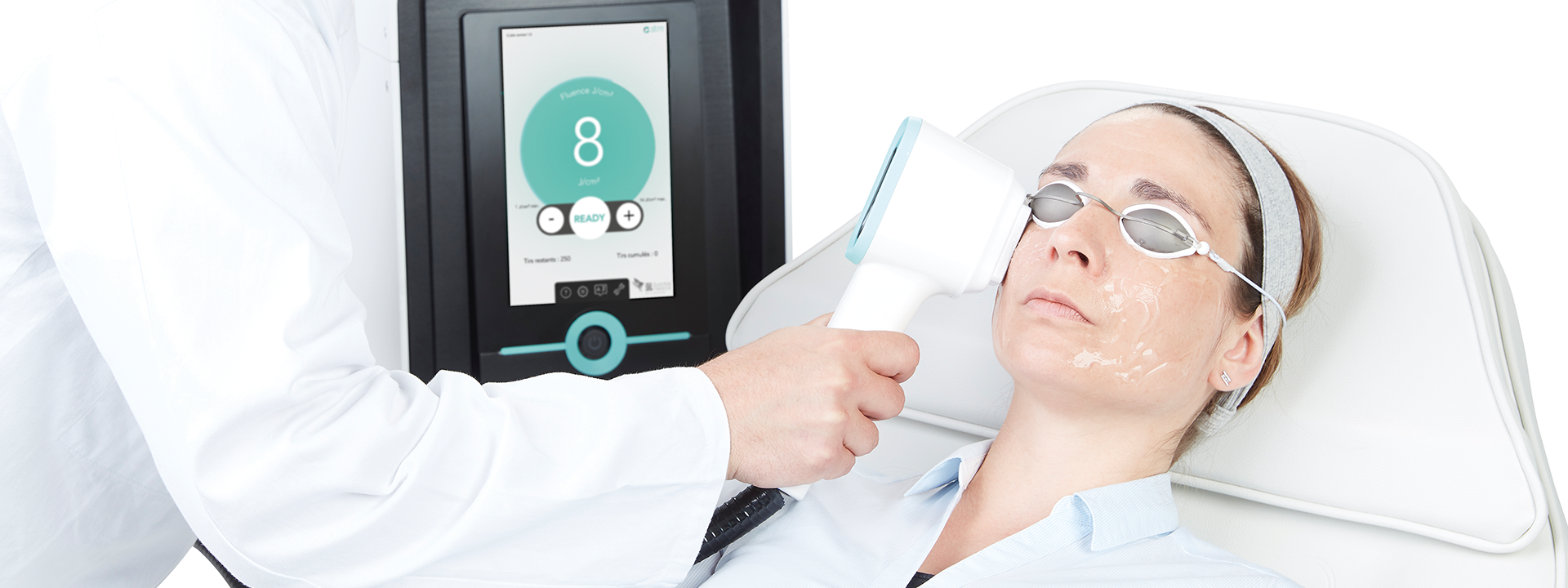
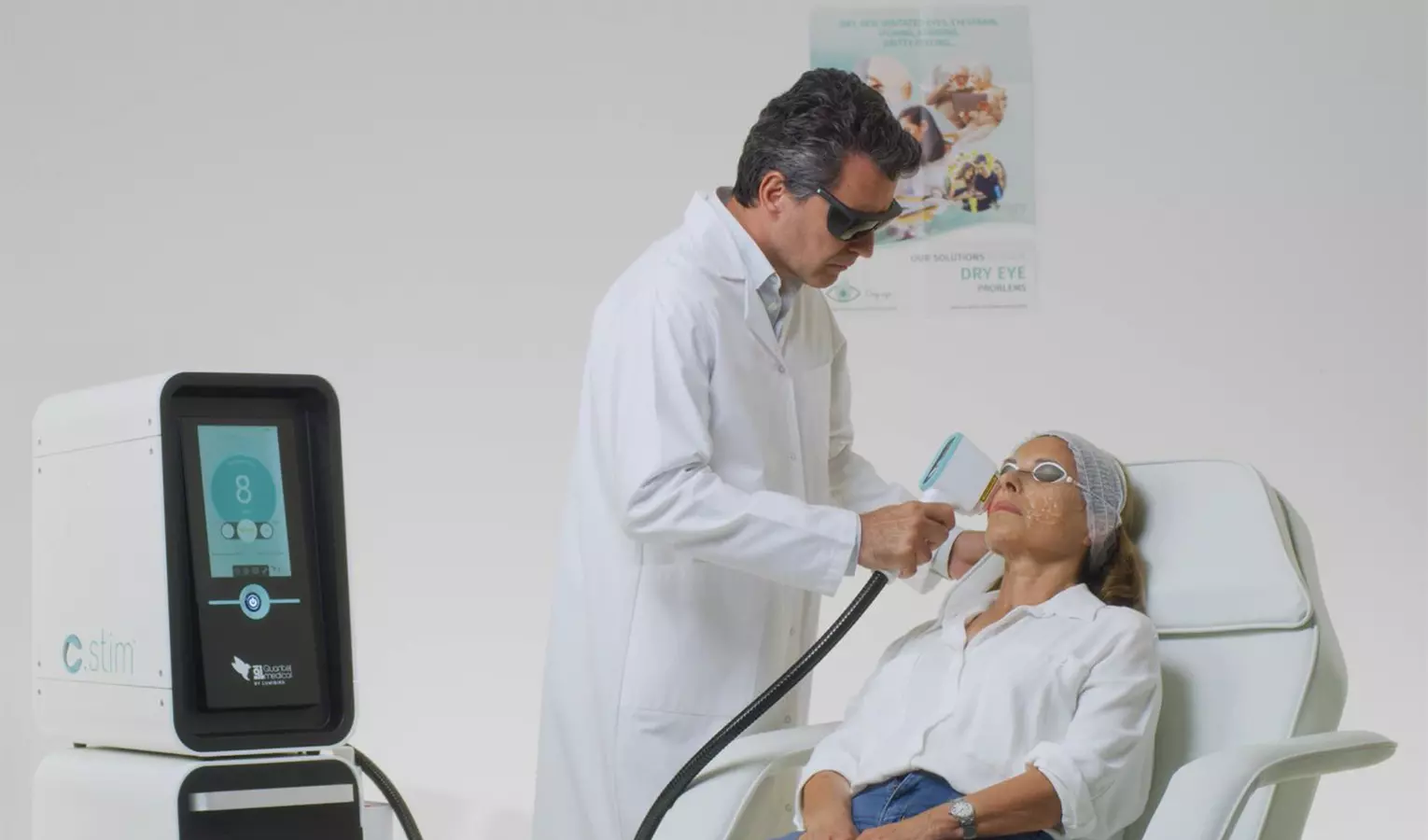
The treatment procedure should be explained to the patient. It is a simple, rapid and painless treatment involving four to six shots on each side in the periocular area, or on the eyelids in the case of severe blepharitis. During treatment on the eyelids, a scleral shell must be used to protect the patient’s retina. A warm sensation may be felt during the treatment.
IPL can be performed on most skin types. However, the power level used (1 to 14 J/cm2) will depend on the patient’s phototype. Fair skin requires a higher power and less power should be used for dark skin, because the light will be absorbed more easily by the skin pigment. There are no side effects apart from skin burn in case of overdose. The recommended standard fluence for phototypes 1 to 5 is 8 J/cm². For treatment on the eyelids, the fluence should be reduced to between 4 and 6 J/cm².
What is the treatment procedure?
During treatment, protective glasses and shells, provided with the IPL, must be used by the patient and the doctor. A layer of gel is applied to the treatment area to improve light transmission. The C.STIM® IPL system has a patented technology called Stim-ULI™ that ensures even distribution of the light on the skin.
The light flashes are delivered by the flash lamp:
- either around the eyes, in the periocular area
- or directly on the eyelids, thanks to the use metal shells under the eyelids
Four to six shots per side are delivered by the flash lamp. Three to four sessions are required, spaced out by 15 days. Depending on the effectiveness of the treatment and the symptoms experienced, additional follow-up sessions may be recommended, usually every 6 months.
To optimise the results, meibomian gland expression is recommended at the end of the session. The thermal action of the IPL makes it easier to express the meibum.
What kinds of patients are eligible?
The main indication for IPL is meibomian dysfunction, i.e. MGD or evaporative dry eye caused by blepharitis.
However, IPL can also be used for dry eye of other causes, for example in patients with eye pain or Sjögren’s syndrome.
IPL can also be used on children, for example in case of repeated chalazions, without any particular contraindication.
IPL is therefore an effective technology for treating dry eye. Results may differ depending on the patient. IPL should not be used alone, but as part of a therapeutic arsenal for long-lasting results.
Source: Presentation by Dr Serge Doan (Bichat Hospital, Fondation Rothschild, Paris, France) at the ACOS [Association des Centres de l'Oeil Sec — Dry Eye Centre Association] 2022 Congress